







J.P. Rooker was fucking scum, they'd say. A rotten piece of garbage who'd go straight to hell. A goddamn charlatan, a dirty thief, a filthy low-life. He'll get what's coming to him, and you tell him that, they'd shout, the angry voices on the phone. As a boy, young Lazarus was always told to never pick up that phone, no matter what, but he couldn't help himself. It was always a good way to learn a few new swear words, at least.
Vina Edson met J.P. Rooker in the early winter of 1974, while she was waitressing at her family's diner in Winchester, Tennessee. Though if you'll ask her, she'll always say she wish she didn't. She'll say she wished she'd given his table to her sister to serve instead, and avoided the whole mess altogether. No regrets, she'd insist, but she should've stayed in the back by the kitchen and just done her bible studies, instead of indulging the smirky bastard in the corner, with the cigarette hanging off his lip, washing his pancakes down with a tall glass of Coke like some sort of idiot, she'd say. Yet, despite her better judgement, she was somehow smitten. He had calloused hands, a grease smudge on his neck, and that stupid guitar case beside him as his only company. How could she resist? He could barely play that thing anyway, she'd learn, just the son of the local mechanic, but he could tell a great story; something about his big blue eyes made you fall for every line of bullshit that came out of his mouth. And lord, was there ever heaps of bullshit, she'd laugh. They were too young to know better, and too young to think ahead, just like all the great downfalls begin. No regrets though, she'd repeat pointedly.
This was the part of the story where Tabi-Rae would roll her eyes. Born approximately nine months later, Tabitha was the surprise cliché that tied them together forever. Shotguns weren't necessary at their wedding, but they were present, and the first-born Rooker child would forever adopt a holier-than-thou stance on loathing how she came into the world too early, but she'd certainly not be the last to artfully deflect the truth of their humble beginnings. Their first house was tiny but adequate, to start, funded by her father's various business ventures, and furnished by gifts from the church and things he'd "come across", legally or otherwise. She and her sister Miriam, born about a year later, knew to never ask questions. Miri was the quiet one anyway, always reading, always doing her bible studies, as if to make up for the ones her mother missed before. It wasn't until Junia was born that their little house began to feel crowded, not only with all the paraphernalia required of raising three little girls, but all J.P.'s overgrown collection of things he intended to sell. His racket was never quite clear, the girls would all claim now, but it was so bad that little Junia slept in the closet. They'd all laugh, but it was true. Her crib was in the closet, they'd say. At least it was a walk-in, she'd clarify, defensively.
They were never trying for a boy, or even trying at all, but Lazarus happened anyway. Mama's little boy, they'd tease. Born with his father's smirk and rebellious streak, Laz was the Rooker family handful. He wasn't the straw that broke the camel's back, but he made it awfully tough for that camel, they'd say. No regrets, of course. At this point in the tale, J.P. Rooker was a mythical figure, slipping in and out of their lives in a flurry of awkward gifts and shouting. Laz would learn about his father through these glimpses, grumbles from his family, and angry phone calls from his former "clients". When they weren't doing their homework at the Edsons' diner with their grandparents, the Rooker kids would spend all their time with the church, singing in the choir, proselytizing with tracts and pamphlets on the street corner, all leading up to the day when Lazarus found his dad's fabled old guitar. His lone lady friend from the cold night J.P. found himself enjoying pancakes with Coke and the smile of a pretty waitress. His mother would tell the journalists years later, Laz was a total natural. Laz picked up that guitar like he was a master in another life. She knew, day one, that he'd be famous for it. They all knew, if you'd ask them. Everyone knows the future after it happens, after all.
In all honesty, Junia could attest, light didn't really come down from the heavens, and in fact, no one gave a shit that Laz found his dad's guitar. It was old, strung badly, and in their monthly visits to see their father in jail, Laz would ask how to tune it, only to be given awkward, half-accurate instructions. After all, he never really played it. It was a just another prop, another piece of the lie that was J.P. Rooker, and though everyone rolled their eyes at young Lazarus' wonky plucking and attempts to teach himself Woody Guthrie and spirituals, some part of the boy was sure he wouldn't have born without that grimy old guitar. He'd tell his friends, this guitar was why he was alive. Without it, he'd claim, his parents would've never met. In his stories, his dad was a great guitarist, and he'd be just like him, he'd run off and make his life as a musician. Tabi-Rae would sigh, gently remind him where his father actually was, and scuttle him on home.
Some years later, news came that J.P. was finally getting out of jail, and despite his best efforts, Lazarus seemed to be the only one excited. He was in high school and arguably far too old to be fantasizing about the man his dad should've been, but he couldn't help himself. He wanted to show him his record collection, his new guitar, and how well he'd learned to play, with the help of fellow musicians at church. He wanted to ask him about jail, if he met anyone that killed a guy, and now that he was older, wanted to ask about the theft and drug-dealing and other unknown things he'd learned had got him in there. As the only one not burdened with ever knowing his father, Laz was the sole Rooker kid to take a vested interest in his dad, despite their warnings otherwise. Don't get your hopes up, they'd say. Don't expect too much. He couldn't help it though, he always did.
Shocking no one, J.P. Rooker never actually came home. He apologized, somehow, but he'd been writing to a woman in New York while he was incarcerated, and had to go up to see her. Just had to, he said. As a man, Laz should know what that's like, he'd said. Laz couldn't help but wonder if he'd meet her in a diner, playing his same old games like a pathetic 70's throwback, angling to build a whole new family to disappoint. He'd take his frustrations out with his music, skipping school with Junia to sneak into the church and mess around with their in-house drum set, writing loud, improvised songs, with Laz on guitar. The two became especially close in those times, oddly detached from their older sisters through personality and sheer timing of it all, and their mother, who was too busy keeping the family and house together. Junia started going by Jaye at this time, a nickname he'd given her, partly based off J.P. himself, and partly as a code of sorts. They'd sneak into one another's rooms at night and tell one another stories of their future, living in New York and stalking their father, making music for real. People would always be oddly suspicious of their relationship, thinking they were too close for siblings, but though they liked to incite the rumors for fun, they were never actually inappropriate.
After Laz graduated, and they'd built a good enough symbiotic music relationship and enough money, he and Jaye decided to make their stories real for once, being the only ones they'd had in their lives that were somewhat attainable. Following their father's footsteps, they headed to New York, got a dingy little apartment together too far outside the city, and despite their hopes, light didn't come down from the heavens then either. Laz picked up odd jobs doing contract studio work, picking up gigs with bands, busking on the street, learning along the way, but it didn't get him shit, he'd say. Good as he was, word of mouth doesn't pay rent. Jaye got a job at a bookstore, which helped, but life was hard. They'd regularly turn down their mother's offers for money she didn't have, and laugh together about the idea of finding their father somewhere in the bustling haystack and asking him for retribution for their childhoods. Finally breaking down and selling some of his more rare records – of which he'd notoriously buy back once he got 'famous' – Laz scraped together enough for them record a demo as The Crooks, an appropriate bastardization of their surname, which they'd also shortened. It didn't get the immediate love and reception he'd hoped and fought for, but eventually made it in the ears of someone willing to give them a chance, and they were signed on to an independent garage punk label, giving them enough of a leg-up to record several singles. And the rest is history, they said. Their lo-fi style of bluesy guitars and raw, simplistic composition garnered them enough attention to release three albums, rising to prominence in the garage-rock revival of 2002. They could afford a bigger place in New York, and so they did, still dreaming of running into their father on the subway, or better yet, him running into any public sign of their newfound fame, seeing the kids he left behind now thriving as strongly as the thrumming, iconic bassline of their now-classic, "Seven Nation Army".
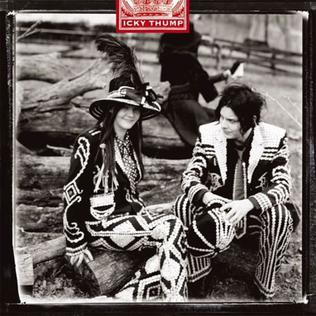
But, of course, they never did, at that point. Perhaps J.P. unknowingly heard one of their songs on the radio, saw them at the Grammy's, even bought an album, they never knew. After releasing Icky Thump in 2007 though, Jaye found herself pregnant, and after struggling enough to continue on together as it was, Laz saw fit to amicably "break up", both to help raise her son, and move on with some new ventures on his own, namely The Mockery, a so-called "supergroup" of his friends from other bands. He and Jaye continued living together, which still raised awkward suspicious of the media, which he loathed. Maybe they weren't really related, they'd say. Maybe they were, and into some freaky shit, they'd say. He'd roll his eyes and get into trouble as usual, fighting or running his mouth, like always. Getting widely-lauded and praised not only gave him somewhat of an ego, but made him jaded, and as much as he loved doing what he loved, he hated the attention that came along with it. As such, Laz became notorious for his opinions, often outspoken about his feelings on various other artists and styles and production, despite having little authority to do so. He was his father's raconteur of a son, after all, with his mother's mouth. God help anyone that got in his way, after all he'd attained.
Bandits Roost came after, another side project he'd put together, and against all odds, in 2008, his father sought him out somehow and made contact at last. The two had an awkward lunch together, in a diner not too unlike the one Laz 'owed his life', sharing stories of their lives thus far, appropriately over pancakes and Coke. Who knew how much of it was bullshit, on either end, but both left with the other's contact information, despite Laz's better judgment, and met up a few times after, each time trading tall tales and records. John Paul Rooker died in 2010 of prostate cancer, and Lazarus took two years off, spending a lot of time back in Tennessee to gather his thoughts and music. Too young to retire and too ambitious to even consider it, he kept busy on the side, never much talking about the the strange void left by his father's death, though it was there and undeniable. He'd come to release his first solo record in 2012, to favorable reviews.
These days, they all say a lot. They say Lazarus Rook is just another one of those too-talented assholes. They say he's a fucking genius, a goddamn sell-out, one of the best guitarists of our generation. They say he's lost his spark, they say he's never been better. They say they miss The Crooks, and the days when he was young and smirky – not too unlike his father was, back in the day. They say a lot of things, they have a lot of opinions. Fuck them, anyway.